
MINOTAUR

The Minotaur inhabits the labyrinth. He did not build it.
The distinction matters.
A labyrinth is an arrangement of passages, boundaries, choices, and returns. It may be constructed to contain something, conceal something, or prevent something from finding its way out.
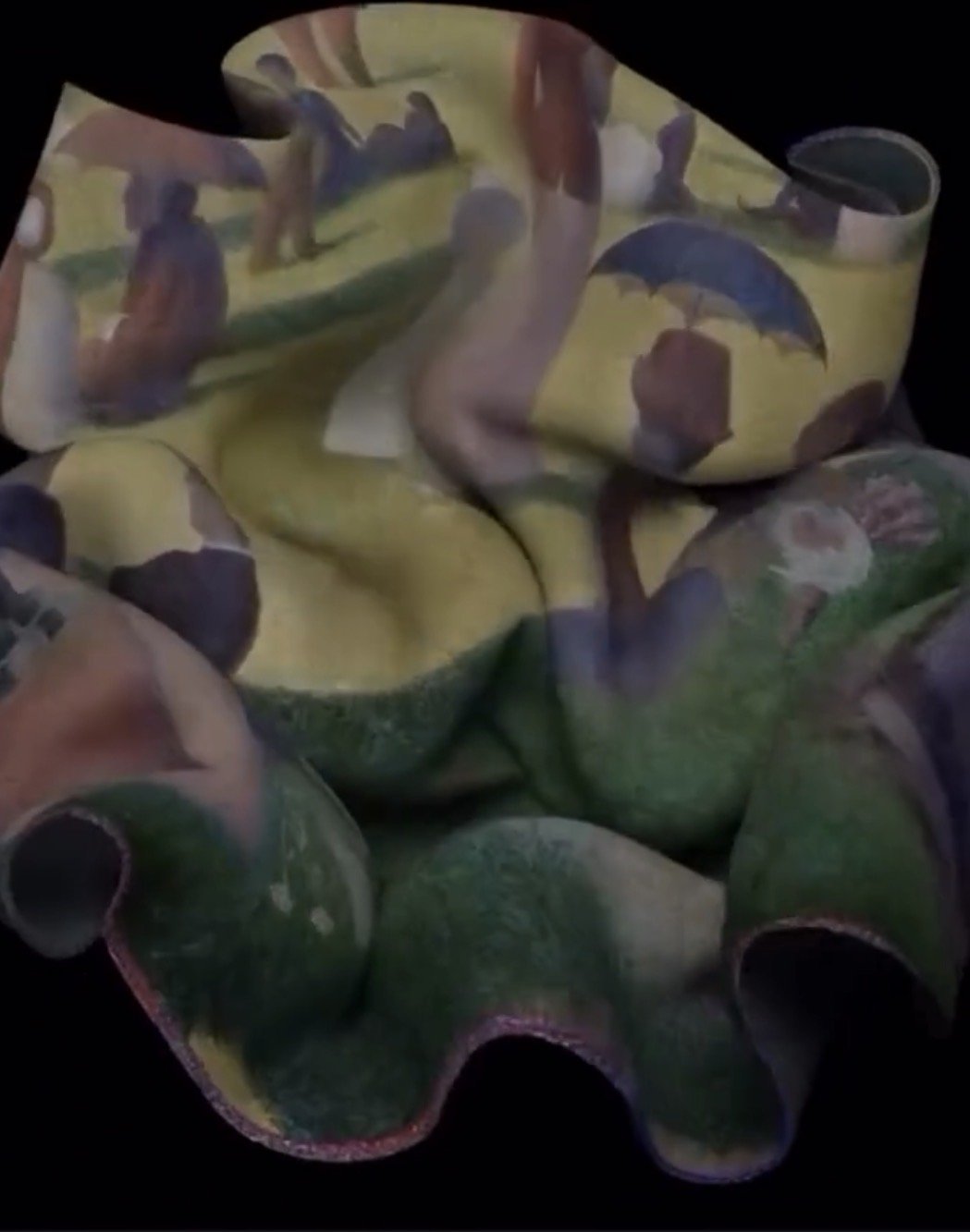
The Minotaur is the creature within it.
His presence gives the labyrinth its terror, but his presence does not explain its construction. The walls precede the encounter. The passages condition every approach. Those who enter must contend not only with the creature but with a field whose design they did not choose.
The Minotaur may be dangerous. That does not make him the architect.
THE THREAD
Ariadne's thread does not defeat the Minotaur.
It preserves a relation between the traveler and the point of departure.
The thread does not remove the walls, straighten the passages, or determine what will happen at the center. It allows a traveler who has entered an uncertain field to retain a recoverable way out.
The distinction between overcoming the creature and recovering the path is essential.
One concerns an encounter.
The other concerns continuity.
A traveler may survive the encounter and still be lost.
THE CREATURE AND THE FIELD
The Minotaur is easily made into an explanation for everything that happens inside the labyrinth.
He becomes the reason for fear, confusion, delay, disappearance, and failure.
But the labyrinth has its own architecture. Its passages were laid out before the traveler arrived. Its constraints operate whether or not the creature is encountered.
To attribute every consequence of the labyrinth to the Minotaur is to mistake the inhabitant for the system.
To attribute the creature's nature entirely to the labyrinth is the opposite error.
Neither attribution is sufficient.
The creature has an identity.
The field has a structure.
The encounter has a history.
These must remain distinguishable.
WARLOCK'S INTEREST
WARLOCK does not require the Minotaur to be innocent, guilty, monstrous, or misunderstood.
Those are conclusions that may belong to a particular telling.
WARLOCK is interested in the extraordinary power of the figure: a creature whose name can make an entire architecture seem alive.
The labyrinth acquires an inhabitant.
The inhabitant acquires a reputation.
The reputation begins to govern the expectations of everyone who approaches.
Eventually, the story may become more powerful than any direct observation of the creature.
That is the point at which enchantment becomes consequential.
WARLOCK may cast the image. It does not thereby establish the fact.
LEAVING KNOSSOS
There is a difference between knowing that the Minotaur exists, knowing where he is, knowing what he has done, and knowing how to leave.
The thread answers only the last question.
It is nevertheless indispensable.
The labyrinth need not be destroyed for a traveler to recover the way out. Nor must every uncertainty about its inhabitant be resolved before departure becomes possible.
The Minotaur remains the Minotaur.
The labyrinth remains the labyrinth.
The thread remembers the way.
Cor amat —
Lingua vocat —
Vox ducit — the voice leads
Verbum ligat — the word binds
la luz attrahit